
Cell Senescence
Neither dead, nor lively

What is Cell Senescence?
Senescence is a cellular response characterised by a stable growth arrest as well as other signalling.
Senescence plays roles in normal development, maintains tissue homeostasis, and limits tumour progression, however, it is also a major cause of age-related disease.
Positive Points
There is experimental evidence showing that the intervention and removal of senescent cells extends life span and improves health span (mice).
Growth stability and homeostasis.
Limiting of tumour progression.
Negative Points
A culprit for age-related disease.
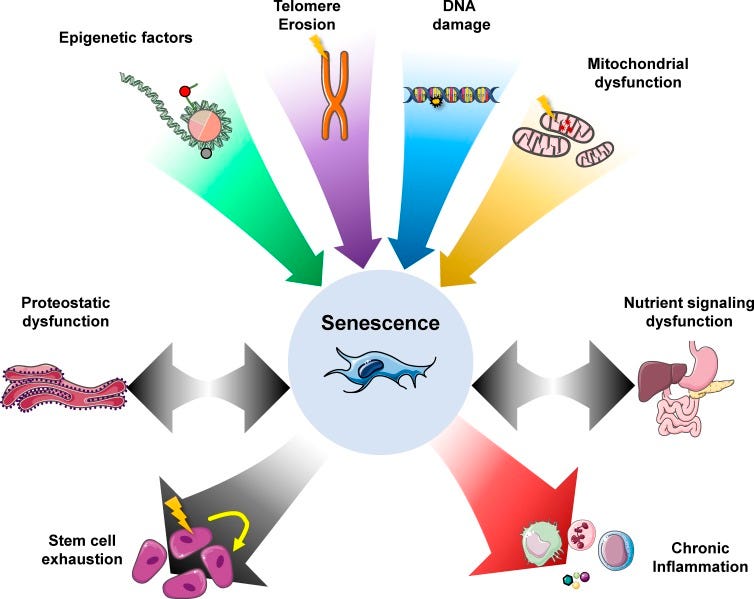
Senescent cells show reduced mitophagy, metabolism in the mitochondria, and a reduction mitochondrial signalling.
Proteostatic dysfunction and misfolded proteins.
SASP
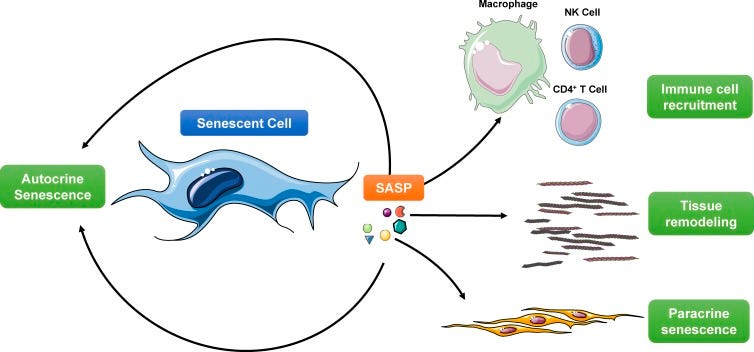
The senescence-associated secretory phenotype (SASP) is a senescent cell feature that stops dividing cell that have stopped dividing due to stress, damage, or reaching their intrinsic limit. This is also a factor driving age-related senescence.
SASP involves the secretion of a mixture of compounds, such as cytokines, chemokines, growth factors, and proteases, into the surrounding tissue. The effects of these compounds depend contextually on whether or not they are beneficial.
SASP Composition:
SASP includes inflammatory cytokines, chemokines, growth factors (e.g., VEGF, TGF-β), and matrix-remodelling enzymes (e.g., MMPs).
These compounds create a pro-inflammatory and tissue-remodelling environment.
Triggers:
Cellular stressors such as DNA damage, oxidative stress, or telomere shortening can induce SASP.
Mechanisms:
The NF-κB and mTOR signalling pathways are key regulators.
Persistent DNA damage response (DDR) signalling is also a key driver of SASP, particularly in maintaining its inflammatory nature.
Positive Effects:
Tissue Repair and Regeneration: SASP factors recruit immune cells to clear damaged cells and stimulate regeneration in the tissue.
Tumor Suppression: Senescent cells can inhibit the growth of nearby malignant cells through anti-proliferative factors.
Negative Effects:
Chronic Inflammation: Persistent SASP contributes to chronic inflammation, linked to aging-related diseases.
Tissue Degeneration: SASP-associated matrix proteases can degrade extracellular matrix (ECM) components, weakening tissue integrity.
Cancer Progression: SASP can paradoxically promote cancer by fostering a pro-inflammatory and pro-angiogenic environment that supports tumour growth.
Fibrosis: Excessive SASP signalling can lead to fibrosis and impair normal organ function.
Remediation
Supposedly, drugs like dasatinib and quercetin can selectively eliminate senescent cells to reduce the burden of SASP. Also consider Angelica Sinensis.
Also in theory, reversing telomere erosion could help. (Remind me to expand on this)
References
[1] Senescence and aging: Causes, consequences, and therapeutic avenues
Much of the details and both diagrams came from this paper.